
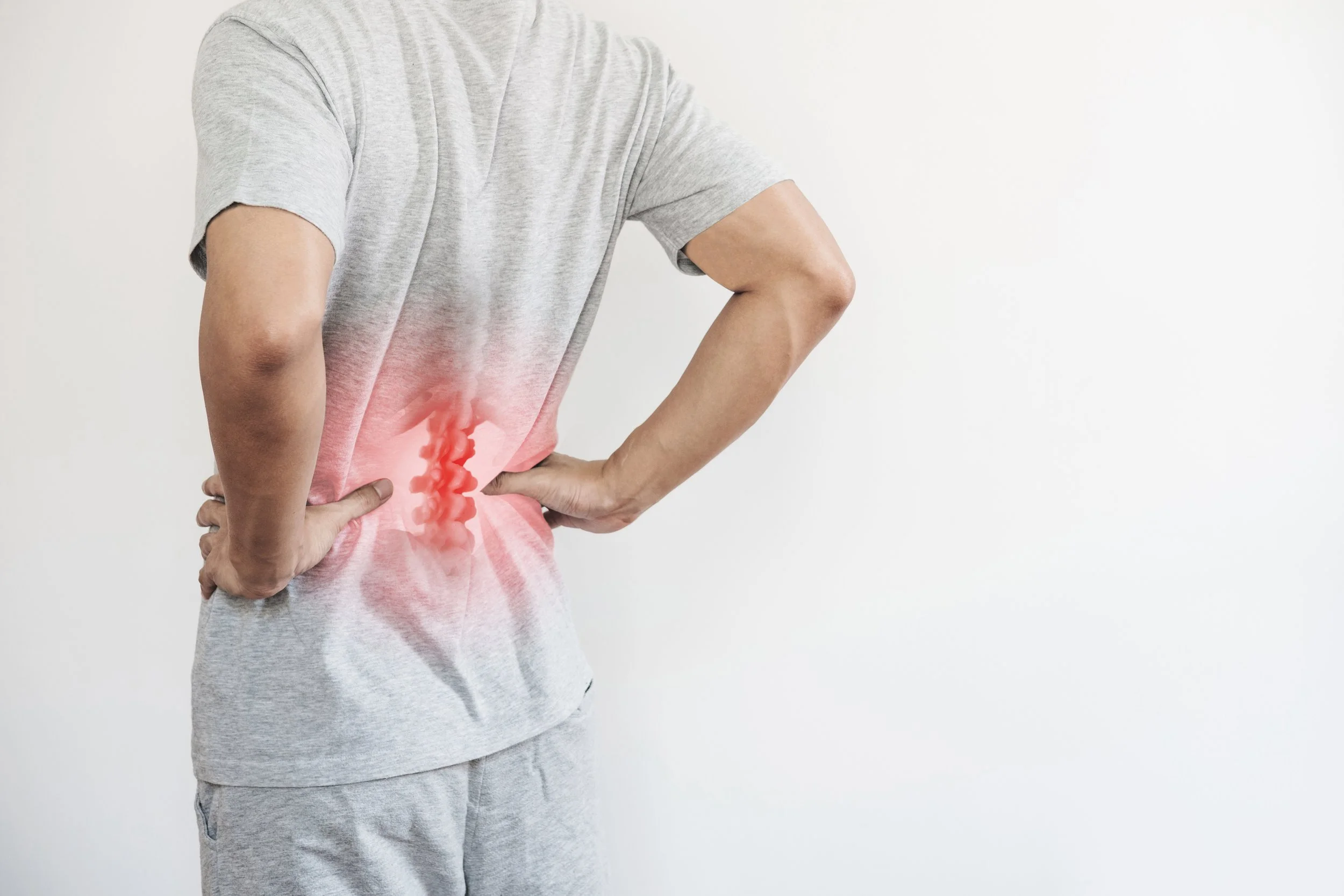
Lower Back Pain / Lumbago
Lower back pain, often referred to as lumbago, is more than just a discomfort—it is a signal that your body’s foundation needs attention. At Signature Physical Therapy, we provide a high-level clinical approach to lumbar health. By combining advanced manual therapy with targeted stabilization, we help you move past the cycle of "throwing your back out" and into a future of strength and resilience.

Common Symptoms
Localized Lumbar Stiffness: A feeling of being "locked" in the lower back, especially after sitting or waking up.
Sharp, Stabbing Sensations: Sudden pain during transitional movements like standing up from a chair or getting out of a car.
Referred Pain: Aching that spreads across the top of the hips or into the groin area.
Muscle Guarding: The feeling of back muscles "seizing up" to protect the spine.
Difficulty Standing Upright: Needing to "walk" your hands up your thighs to stand up straight.
Leading Causes
Lumbar Muscle Strain: Micro-tears in the large muscle groups of the lower back due to sudden lifting or twisting.
Facet Joint Dysfunction: Irritation of the small joints behind the vertebrae that allow for spinal movement.
Ligamentous Sprain: Stretching or tearing of the tough bands of tissue that hold the spinal bones together.
Core De-conditioning: Weakness in the deep stabilizing muscles (Multifidus and Transverse Abdominis) leading to spinal instability.
Postural Syndrome: Prolonged stress on the lower back structures caused by poor seated or standing mechanics.
Symptoms and Causes

How We Treat
Our Targeted Approach to Lumbago Recovery
We don't just "rub the sore spot." We analyze the entire kinetic chain to ensure your lower back has the support it needs to stay pain-free.
Segmental Mobility Assessment: We identify exactly which level of your spine is restricted and use gentle mobilization to restore movement.
Manual Soft Tissue Release: Hands-on techniques to release muscle guarding and "reset" the nervous system's pain response.
The "Core 4" Stabilization: We teach you how to activate the four critical muscle groups that provide an "internal brace" for your lower back.
Biomechanical Education: We review your daily habits—from how you sleep to how you lift—to remove the "mechanical triggers" of your pain.
Functional Loading: We guide you through safe, progressive exercises that rebuild your confidence in moving your spine under load.