

Vertigo
Vertigo is more than just dizziness—it is a disruptive condition that can make the world feel like it’s spinning out of control. At Signature Physical Therapy, we specialize in Vestibular Rehabilitation. Our doctor-led approach focuses on identifying the root cause of your symptoms, whether it’s an inner ear issue or a balance deficit, to provide rapid and lasting relief.

Common Symptoms
Spinning Sensations: A feeling that you or the room around you is moving (Vertigo).
Disequilibrium: Feeling unsteady on your feet, as if you might fall.
Nausea & Lightheadedness: Feeling "off" or "seasick," especially during head movements.
Visual Disturbance: Difficulty focusing on objects or a feeling that the world is "jumping" (Oscillopsia).
Positional Triggers: Dizziness that occurs specifically when rolling over in bed, tilting your head back, or bending over.
Leading Causes
BPPV (Benign Paroxysmal Positional Vertigo): Small "crystals" in the inner ear becoming displaced and entering the wrong canal.
Vestibular Neuritis: Inflammation of the vestibular nerve, often following a viral infection.
Meniere’s Disease: An inner ear disorder that causes episodes of vertigo and hearing changes.
Labyrinthitis: An inner ear infection that affects both balance and hearing.
Cervicogenic Dizziness: Dizziness stemming from issues in the neck or cervical spine mechanics.
Symptoms and Causes
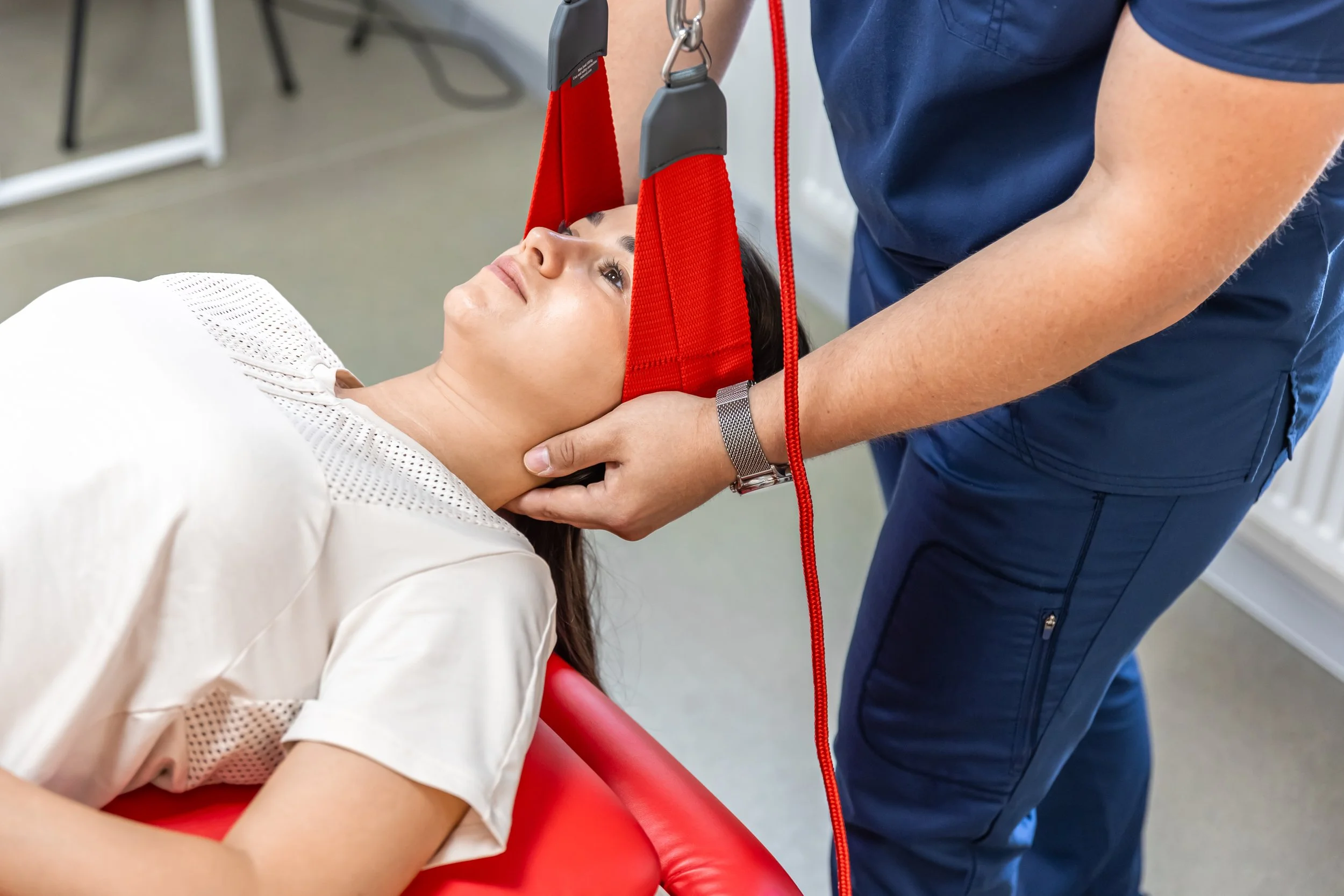
How We Treat
Our Precision Vestibular Approach
We use specialized diagnostic movements to determine exactly which part of your balance system is malfunctioning, often providing significant relief in just a few sessions.
Comprehensive Vestibular Assessment: Using clinical tests to observe eye movements (nystagmus) and determine the exact source of your dizziness.
Canalith Repositioning (Epley Maneuver): For BPPV patients, we use precise head movements to guide inner ear "crystals" back to where they belong.
Gaze Stabilization Exercises: Training the brain to maintain clear vision during head movements, reducing that "fuzzy" or "jumping" visual sensation.
Habituation Training: Gradually exposing the nervous system to specific movements to reduce the brain’s over-sensitivity to motion.
Static & Dynamic Balance Training: Building the physical strength and coordination needed to prevent falls and restore confidence in community walking.
Frequently Asked Questions
-
Benign Paroxysmal Positional Vertigo (BPPV) occurs when tiny calcium carbonate crystals (otoconia) dislodge from their proper place in the inner ear and float into the semicircular canals. This sends false motion signals to your brain, causing a severe spinning sensation. Our NYC vestibular specialists use precise, head-repositioning maneuvers (like the Epley maneuver) to safely guide the crystals back into place, often resolving the vertigo in just 1 to 3 sessions.
-
Your initial session is a comprehensive, 1-on-1 diagnostic evaluation led by a Doctor of Physical Therapy. We thoroughly assess your eye movements, tracking patterns, balance, and neck mobility to pinpoint the exact source of your dizziness. Because some testing can temporarily reproduce your spinning symptoms, we design a highly controlled, safe pacing strategy to ensure your comfort throughout the evaluation.